What MOTS-C Actually Is

August 2026 · 8 min read
Before anything else: I'm a paid affiliate for Feel Peptides. If you buy through my link or my code, I earn a commission. I'm taking MOTS-C myself right now. I'm not a doctor or a nurse, and nothing here is medical advice. Read the rest knowing all of that.
MOTS-C is one of those words that started showing up everywhere. In my gym, in my DMs, in videos from people I follow. And every single post I found about it fell into one of two piles. Hype with big promises, or a research paper I needed a dictionary to read.
So I did the reading so you don't have to. Here's the honest middle: what it is, what people actually found, and the part almost nobody says out loud.
What MOTS-C is
MOTS-C is a peptide. That just means a short chain of amino acids, the little building blocks your body uses to make protein. This one is just 16 of them in a row, so it's tiny.
What makes it interesting is where it comes from. Most of your DNA sits in the center of your cells. But you have a second, tiny set of DNA in your mitochondria, which are the little parts of your cells that make energy. MOTS-C is written into that second set.
Your body makes it on its own. It was first described in a 2015 paper in a journal called Cell Metabolism. So it's real, it's yours, and it's been studied for about ten years now.
The name is just a description of where it lives. Mitochondrial Open reading frame of the 12S rRNA type-c. Nobody says that out loud.
The exercise connection, and why it gets twisted
Here's the finding that started all of this, and it's a real one.
Researchers took a small group of healthy young men, had them ride a stationary bike, and measured MOTS-C before and after. It went way up. In their muscle it rose about twelve times higher. In their blood it went up too.
So exercise raises the MOTS-C your own body makes. That's measured in actual people. That part is solid.
Now watch how that gets turned into a sales pitch. You'll see MOTS-C called "exercise in a bottle." You'll see people say it gives you the benefits of a workout without the workout.
That is not what the study found, and I want to be really clear about the difference.
"People who exercise have more of this peptide in their body" is true and measured.
"Putting this peptide into your body does what exercise does" has never been tested in a single person.
It's a little like noticing that people who run a lot have thicker leg muscles. True. But it doesn't follow that having thick legs makes you a runner. The arrow could point either way, and nobody has sorted it out.
What the mice showed
The mouse studies are honestly cool, and I don't want to be dismissive of them.
In one study from 2021, researchers gave MOTS-C to mice of different ages and put them on treadmills. The old mice ran about twice as long and about twice as far as the ones that didn't get it. Their grip strength improved. Their walking got steadier.
Other mouse studies found it helped with weight gain from a high fat diet, and with how the animals handled blood sugar.
Those are genuinely interesting results from real labs. They're the reason anyone is paying attention at all.
They're also mice.
The part nobody puts in the caption
I went looking for human studies. Here is exactly what I found.
There has never been a completed study where MOTS-C was given to people and the results were reported. Ever. Not one.
There is one starting. A trial began in February 2026 at a single hospital in Shenzhen, China, testing it in adults with prediabetes against a placebo. It won't report anything before 2027, and as of right now it has posted no results at all.
And this next part is the one that stopped me.
In July 2026, the FDA reviewed MOTS-C. Their scientists wrote that they could not find "any clinical studies or human exposure data for MOTS-C via any route of administration." They also could not find animal safety studies. No toxicity studies. No studies on whether it affects pregnancy. Nothing on cancer risk.
So when someone tells you what MOTS-C does for energy, or focus, or recovery, or your skin, here's where that's coming from. Mice, dishes, and stories. That's the whole pile.
About that "the FDA just approved peptides" thing
You may have seen this going around in the last few weeks. It's wrong, and it's worth getting right.
At that July meeting, an outside advisory panel voted 7 to 5 to recommend that pharmacies be allowed to compound MOTS-C. That vote went against what the FDA's own scientists recommended, and the scientists said why. No human safety data. No human results data.
That vote is a recommendation. It is not binding, and nothing has actually changed. MOTS-C has not been added to any approved list. It is not an approved drug for anything.
If someone tells you the FDA approved peptides in July, that's what they're misreading.
If you're a drug tested athlete, stop here
If you compete in anything drug tested, or your kid does in college sports, this would be a violation. Please don't find that out the hard way.
I almost didn't know this myself, and I don't see anybody in my corner of the internet saying it. So I'm saying it.
What the label on the bottle actually says
This one matters and it applies to the company I work with too.
Feel Peptides sells MOTS-C. I'm an affiliate for them, so read this knowing that. Their own product page says this, word for word:
"All products offered on this website are intended solely for laboratory research and development purposes. They are not approved for human or veterinary use."
That's not fine print I dug up. That's on the page. And it's not unusual. Most peptides sold this way carry the same language.
It's worth sitting with what that means. It means the product wasn't made for going into a person. Nobody checked it for the things you'd check for a medicine. The FDA has specifically pointed out that for products like these, there's no data on whether they're sterile, or what else might be in the vial besides what's on the label.
I'd rather you hear that from me than not hear it.
Why I'm not going to tell you what it did for me
I know that's probably what you came here for, and I thought about it a lot.
Here's my problem. In the same stretch of months that I've been taking MOTS-C, I have also been doing Pilates, lifting with a trainer, walking, hot fitness classes at five in the morning, pelvic floor therapy, red light, cryo, breathwork, and hitting my protein like it's a job.
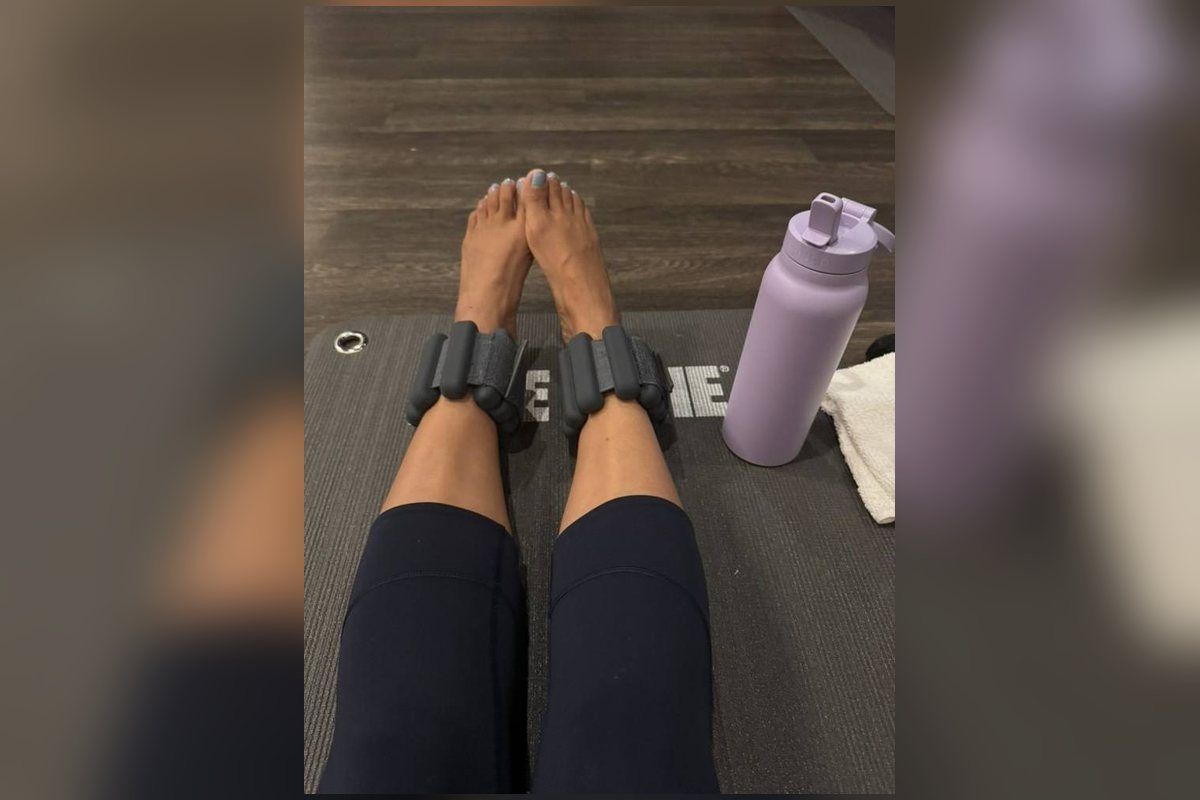
If I feel good, which thing gets the credit?
I have no idea. And anybody who tells you they can untangle that for themselves is guessing, whether they know it or not.
The honest answer is that most of how I feel is probably the boring stuff. The sleep I can get. The lifting. The protein. The walking. That was true before I ever heard the word peptide and it's still true.
There's also this. My story would be one person, with no control group, who knew exactly what she was taking and wanted it to work. That's the exact setup where people feel changes that aren't there. It happens to smart people constantly. It would happen to me.
So I'm going to tell you what I'm doing, and I'm not going to dress it up as proof of anything. If that's disappointing, I get it. But I'd rather be the person you can trust in two years.
What I'd want you to think about first
- Is it approved? No. Not for anything, in any form.
- Has it been tested in people? No completed study exists. One just started and reports in 2027 at the earliest.
- Is it safe? Nobody knows. There's no human safety data and no animal toxicity data either. Not knowing of harm is not the same as knowing it's safe.
- Am I drug tested? If yes, it's banned. Full stop.
- What does it cost? A 10mL vial runs around $540. That's real money for something unproven.
- Have I talked to someone who knows my history? A provider who knows your meds and your labs, not a blog post. Including this one.
- Am I doing the free stuff first? Sleep, protein, walking, lifting. I'm an affiliate for a peptide company and I still think nothing in a vial beats those.
Where I get mine
I use Feel Peptides and I'm a paid affiliate for them, which means I have a reason to want you to click. Keep that in your head.
What I looked at before I picked them was their paperwork. They publish third party Certificates of Analysis, and they say their products are made in a US facility that's registered with the FDA and follows cGMP practices.
I want to be careful with those words because they sound bigger than they are. FDA registration is a required listing, nothing more. It is not an approval, and the FDA has publicly warned companies for using it that way. The FDA also does not hand out cGMP certificates. And a Certificate of Analysis tests one sample for what's in it. It is not a safety clearance.
So the paperwork is better than nothing. It is not the same as approved. You deserve both halves of that.
I get commissions for purchases made through links in this post. My code Janet10 gets you 10% off your first order. They also offer a subscription that keeps the discount going. If you go that way, read the billing and cancellation terms first, and know that a subscription means committing to ongoing use of something that isn't approved.
Have a look at Feel Peptides →
Paid link. This product is not FDA approved and is labeled for laboratory research only. This is not medical advice. Please talk to your own doctor before starting anything new.
Frequently asked questions
What is MOTS-C in one sentence?
A very small peptide, 16 amino acids long, that your own mitochondria make, first described in a 2015 research paper.
Are there human studies on MOTS-C?
No completed ones. There has never been a finished study where MOTS-C was given to people and the results reported. One trial started in February 2026 and will not report before 2027.
Is MOTS-C FDA approved?
No. It is not approved for anything. In July 2026 an advisory panel voted narrowly to recommend allowing pharmacies to compound it, against the FDA's own scientists, but that vote is not binding and nothing has changed.
Is MOTS-C banned in sports?
Yes. It's named on the World Anti-Doping Agency's 2026 Prohibited List as a metabolic modulator, banned at all times. USADA lists it too.
Does MOTS-C really work like exercise?
That idea comes from mouse studies and from the fact that your own MOTS-C goes up after you work out. Nobody has ever tested whether taking it does what exercise does in a person.
Is it safe?
Nobody knows. The FDA reported in July 2026 that it could find no human safety data and no animal toxicity studies at all. That's not the same as it being dangerous, and it's not the same as it being safe. It means unknown.
Are you a medical professional?
No. I'm a creator sharing what I've learned and what I'm doing. Nothing here is medical advice.
Janet Von Schmeling
Orlando mom of two and the creator behind Planet Janet TV. I have no medical or scientific training. I share the real tips, trips, and wellness finds I actually use. Come say hi on Instagram.
What Peptides Actually Are
The plain English starting point. What they are, how they're taken, and the risks nobody mentions.
Read it next →Sources: Lee et al., Cell Metabolism, 2015 (the original MOTS-C paper) · Reynolds et al., Nature Communications, 2021 (the mouse exercise study and the human cycling measurements) · FDA Pharmacy Compounding Advisory Committee briefing document on MOTS-C, July 2026 · ClinicalTrials.gov record NCT07505745 · World Anti-Doping Agency 2026 Prohibited List, section S4.4.1 · USADA, "What is the MOTS-c peptide?" · Feel Peptides product page, retrieved August 2026. This is education, not medical advice.